Understanding my newly recognized operating system
- 13 minsWritten by me, edited with robot assistance.
I’ve always known the operating system JoshHoltz.app runs on was a little different.
Throughout my life, I unconsciously tuned the way I live for the “best” version of Josh. The environments I work in. The tools I obsess over. The routines I keep. The way I recover after social events. The way I hyperfocus. The way I burn out.
But I never fully understood why.
For most of my life, I assumed JoshHoltz.app was running the standard neurotypical operating system. And honestly? For 34 years, things mostly held together.
Until they didn’t.
Recently, the system started crashing harder and harder. Reboot loops. Overclocking. Total freezes. Patch after patch that only made things worse. Something underneath everything wasn’t operating the way I thought it was.
JoshHoltz.app is not running a neurotypical operating system.
And this week, I finally got confirmation of something I think part of me has probably always known.
"I was officially diagnosed with AuDHD (autism + ADHD)."
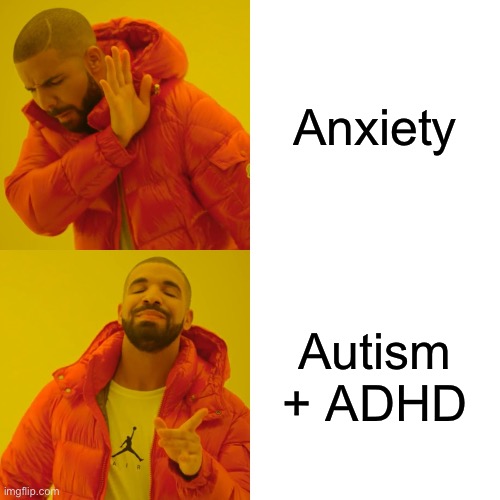
Suddenly, decades of seemingly disconnected behaviors, struggles, sensitivities, coping mechanisms, hyperfixations, burnout cycles, and “quirks” started resolving into a system diagram that finally made sense.
Discovering the interface/architecture mismatch
We can’t just go from a semi-broken app to a perfectly stable release overnight though. No no no.
First, we apparently need to break the app even more 😅
And honestly, that was probably the hardest part of this journey.
There were both positive and negative cues that eventually pushed me toward getting a serious evaluation.
One of the biggest ones was noticing a recurring pattern: friends casually asking if I was ADHD or AuDHD. One person asking? Whatever. But eventually I realized there was a pattern I might have been ignoring for a very long time.
Which now feels a little ironic.
At the same time, I started noticing myself becoming increasingly overstimulated by things that never used to affect me this intensely:
- sound
- lights
- too many conversations happening at once
- constant notifications
- context switching
- social overload
For the longest time, I genuinely didn’t understand what was happening to me.
But life in your 20s and 30s is very different.
There’s more noise.
More responsibilities.
More unpredictability.
More simultaneous processes running all the time.
And it became much harder to maintain the highly regulated systems and routines I had unconsciously built for myself over the years.
Systems I didn’t realize I deeply depended on to keep JoshHoltz.app stable.
The breaking change
Around September-ish of last year (2025), I decided it was time for a major version update of myself.
I ACTUALLY SCHEDULED AN APPOINTMENT WITH A THERAPIST.
FWIW, that felt like the hardest part at the time.
I was very, very wrong.
I went into that first appointment mostly looking to explore an ADHD diagnosis. I explained where my head was at, how overwhelmed I had been feeling, and how I was struggling with overstimulation that I just couldn’t “shake off” anymore.
I answered a lot of questions about my past, which made sense.
But something felt off.
I kept trying to explain that present-day Josh felt VERY different than past Josh. That was mostly brushed aside, which now feels like the first major red flag that I might have been heading down the wrong diagnostic path.
At that appointment, I was told that what I was experiencing could very well be anxiety.
Which honestly confused me even more.
I worry very little.
I roll with the punches most of the time.
Maybe even too much.
I’m obviously not the medical expert though, so I continued down that path and tried to stay open-minded.
Even while the conversation kept leaning toward anxiety, I still pushed for an ADHD assessment.
I was told there were two options:
- a quicker computerized assessment
- a longer multi-session in-person evaluation
The quick (and cheaper) route seemed reasonable to start with.
So I did it.
The results came back as essentially: “traits of ADHD, but not enough to fully diagnose.”
Honestly, I was disappointed.
It felt like I had mostly been grouped into an “anxiety” bucket instead.
But at that point, I was desperate for relief from the overstimulation and internal chaos I had been experiencing.
So… I started the meds.
I didn’t really know what to expect. But I was willing to try almost anything if it meant stabilizing the system.
And technically… they worked.
The overstimulation from things like lights and sounds became quieter.
But so did everything else.
The meds didn’t just mute external noise.
They muted me.
"The meds didn't just mute external noise. They muted me."
I became way too relaxed.
Way too sleepy.
Way too emotionally flat.
And maybe the weirdest part:
I lost my ability to enjoy building things.
FWIW, I’ve never actually loved “coding itself.” Coding has always been a means to an end for me. I love making things. Building systems. Creating weird ideas and watching them come alive.
But suddenly even that feeling was gone.
The burn and crash
Fast forward to February, and things got really bad.
I’ve learned that if I don’t intentionally schedule long stretches off work way in advance, I simply won’t take them.
Historically, those breaks still involved sitting at a computer doing computer things because… well… I’m a computer person 😅
But this time was different.
I spent almost an entire week unable to leave the couch.
No motivation.
No energy.
No desire to do anything.
Not even the things I normally love doing.
The second week was slightly better, but still deeply not me.
Eventually I needed to take a third week off work.
THIS IS VERY NOT JoshHoltz.app.
Honestly, writing this part now still kind of scares me.
I can’t imagine what it felt like for my teammates and manager hearing that something was this wrong.
And I never want to go back there again.
That was the moment I realized this “major version improvement” I had been chasing was actually moving me further away from myself instead of closer to understanding myself.
I had over-engineered in the completely wrong direction.
This wasn’t the right future for JoshHoltz.app.
My next therapy appointment needed to go very differently.
Revert, research, and rebuild
I’m very bad at explaining how I feel.
(Again, something that makes so much more sense now.)
I spent a solid week rubber ducking with ChatGPT before my next therapy appointment. I gave it context from previous appointments, explained how I was physically feeling, and tried to describe patterns about myself that I liked and didn’t like.
Eventually, we got to the point where it helped me put together a script to request a neuropsychological evaluation.
This is something I genuinely do not think I could have easily done on my own.
Having a robot help organize all of my scattered thoughts, patterns, and experiences into something structured and explainable was incredibly helpful.
The appointment finally came around, and for once things actually felt… easy.
I got exactly what I wanted from that session:
- I wanted off the meds that were changing me
- I wanted further evaluation and answers
Easy peasy!
For now…
Hardest revert ever
I’ve reverted a lot of commits and deployments in my life.
(I’m extremely good at making mistakes and then realizing I made them 😅)
But this revert was different.
I had to taper off the meds slowly, and I was absolutely not prepared for what that process was going to feel like.
This wasn’t a quick rollback.
It was a carefully managed 6-week process filled with physical and mental side effects.
The biggest ones for me were:
- exhaustion
- low motivation
- emotional flatness
- and “brain zaps”
If you’ve never experienced brain zaps before, they’re incredibly weird. The best way I can describe them is:
- a physical zap sensation in your brain
- combined with the feeling of a skipped audio track
- or dropped frames in real life
It’s kind of dizziness.
But also… not really.
Anyway, those 6 weeks obviously affected everything around me:
- personal life
- work
- relationships
- productivity
- energy
I wanted out of the loop badly, but getting out required pushing through one of the hardest transitions I’ve gone through in a long time.
At the exact same time, I was also transitioning at work from Engineering Manager back into an Individual Contributor role.
And honestly? It was kind of my dream role.
I was moving into a much more flexible “free agent” style Developer Experience position where I could build weird things, help developers, experiment more, and operate in ways that fit my brain significantly better.
The timing could not have been worse 😅
I was in the middle of:
- low productivity
- low motivation
- physical side effects
- emotional instability
- burnout recovery
I knew I could do amazing things in this new role.
But I just… couldn’t.
And that disconnect was brutal.
Researching how my brain operates
At the same time, I was also going through the neuropsychological evaluation process.
There was:
- a long remote intake session
- a giant in-person testing day
- a final results appointment
The first appointment was actually kind of… fun?
For the first time in this entire process, I felt like I was talking to someone who genuinely listened and understood me.
She asked questions nobody had asked me before.
And somehow, in a single hour, it felt like we had made more progress than the previous 6 months combined.
The second appointment was… SOMETHING.
It was around 4-ish hours of puzzles, memory tests, attention challenges, pattern recognition, and various forms of “how does this brain actually operate?”
Some parts were really fun.
Others, especially around memory and attention, were honestly pretty defeating.
By the end of it though, I felt strangely optimistic.
Exhausted.
Completely brain-fried.
But optimistic.
For the first time in a long time, it felt like I was actually heading toward answers.
I didn’t know what those answers were going to be yet.
But ANSWERS.
Rebuilding from the results
Today, literally like 5 hours ago as I’m writing this, I got the results.
Waiting for them was brutal.
For two weeks, every possible scenario went through my head.
At the start of the appointment, we talked about how I felt the testing process went. Then we started going through the actual results:
- areas where my brain excelled
- areas where it struggled
- areas where things were inconsistent or all over the place
The overall picture ended up being pretty interesting.
Apparently I’m intelligent (obviously 😉).
I scored very high in:
- visual thinking
- spatial reasoning
- pattern recognition
My working memory was decent.
But my verbal listening and verbal memory scores were… not great.
Which honestly surprised absolutely nobody, including me.
But the bigger conversations ended up being around:
- sensory regulation
- social processing
- overstimulation
- masking
- cognitive fatigue
And then came the final conclusions:
- Primary autism
- Secondary ADHD
I was so relieved to finally have an answer.
But honestly… I wasn’t expecting that order.
I had spent months mentally preparing for: “primary ADHD with maybe some autistic traits.”
Not:
- Autism
- ADHD
That genuinely surprised me at first.
But the more I sat with it, the more the entire system architecture of my life suddenly started making sense.
The ADHD explained some of the chaos:
- jumping between ideas
- novelty seeking
- hyperfocus spirals
- difficulty regulating attention
- impulsive project energy
But autism explained the structure underneath everything:
- the deep need for predictable systems
- why I unconsciously built highly regulated routines
- sensory overload
- why social interaction can feel both energizing and exhausting
- why I obsess over reducing friction in workflows
- why I need recovery after high-output events
- why I communicate better through systems than raw emotion
- why I’ve spent most of my life designing environments that help stabilize JoshHoltz.app
It also explained something I had never fully understood about myself:
I don’t just like systems.
I depend on them.
"I don't just like systems. I depend on them."
And when enough of those systems break at once, the operating system underneath starts overheating fast.
The beta of JoshHoltz.app 2.0
So… this is where I’m at today.
I’m fully off the medication now, minus a few lingering brain zappies here and there, and I feel like I’m back to the version of JoshHoltz.app that somehow managed to work surprisingly well for 34 years under very specific conditions.
“I’m so back” is the internet phrase, and honestly? Yeah… I do feel that.
But…
That’s not actually good enough for me anymore.
I’m not trying to get back to the old version of myself.
I finally understand the operating system I’m running on now.
JoshHoltz.app 2.0 is being rebuilt for neurodivergent architecture from the start.
And honestly, that changes everything.
YOLO monkey-patching random meds onto the system is probably not the strategy 😅
I need to:
- actually read the docs
- understand the hardware
- talk to people running similar systems
- build healthier defaults
- stop overclocking the operating system until it crashes
This part is going to take time.
But for the first time in a very long time, it actually feels like I’m solving the right problem.
I don’t need to force JoshHoltz.app to run like a neurotypical operating system.
I need to build an environment where this operating system can run efficiently, sustainably, and without constantly overheating itself trying to look “normal.”
Stay tuned for official release
I don’t have an official release date for JoshHoltz.app 2.0.
And honestly, trying to force one probably defeats the point.
Instead, I’m going to do what I do best:
- find patterns
- solve real problems
- build weird things
- accidentally create new problems
- iterate
- have fun doing it
But this time, hopefully in a way that isn’t actively toxic to my mental and physical health.
And genuinely, thank you to my friends, family, coworkers, and the people around me who experienced this whole thing with me.
I know it wasn’t easy.
I disappeared.
I went dark.
I changed.
But looking back now… that version of me was running on a system that was completely overwhelmed and trying desperately to compensate.
I think I finally understand why now.
And honestly?
That feels really good.
This is just my experience. Yours might look completely different — and that’s okay.
